
Physician-led wound care, delivered at the bedside.
Serving skilled nursing and long-term care facilities across the Phoenix metropolitan area.
What we do
Any patient.
Whoever needs to be seen, whatever their payer.
Any wound.
Every stage, every etiology, from a simple skin tear to a wound nobody has been able to name.
Any part of the body.
No exclusions by location or complexity.
Who we see
If it's a wound, we see it.
We don't pick and choose. Not just the stage 3s and 4s. Not just the diabetics. Not just the ones that need a procedure.
We come to you.
Residents are seen in their rooms, on a rounding cadence set with your facility. New wounds and urgent concerns are worked in as they come up.
One visit, start to finish.
Assessment, debridement when it's indicated, bedside procedures, the plan of care, and the documentation — all in the same visit. No transport. No outpatient appointment. No gap between being seen and being treated.
A physician, in your building.
Not a name on a chart. Someone who sets the standard of care, sees the complex wounds, and is on the floor.
At the bedside
Wound evaluation and management
Sharp debridement, selective and excisional
Incision and drainage
Wound biopsy
Treatment orders and dressing direction
Progression tracked visit over visit
Debridement shouldn't be something a resident dreads.
Procedures are done with topical anesthetic, and local injection when the wound calls for it.
The question isn't what can be done at the bedside. It's what this resident needs.
What we treat
Pressure injuries, all stages
Diabetic and neuropathic foot ulcers
Venous ulcers
Arterial and ischemic ulcers
Vasculitic ulcers
Lymphedema-related wounds
Moisture-associated skin damage
Surgical wound complications and dehiscence
Skin tears, all types
Traumatic wounds — lacerations, abrasions, shearing
Burns
Radiation-related skin injury
Malignant and fungating wounds
Atypical wounds — pyoderma gangrenosum, hidradenitis suppurativa
Cellulitis and soft tissue infection
Non-healing wounds of unclear etiology
What your building gets
Same-day notes.
Written to support your clinical record, your MDS coding, and your survey readiness.
A direct line to the physician.
Your wound nurses can reach us directly between visits — not a call center, not a callback queue.
Bedside teaching.
Your nurses learn wound assessment and management alongside us, on your residents, in real time.
Care philosophy
Conservative first.
Clinical indication and published wound care guidelines drive the plan of care. Advanced therapies have their place — they aren't where we start, and we don't build treatment around them.
The basics are what close wounds.
Show up on the day we said. Examine the wound properly. Address what's actually driving it. Document it clearly enough that the next person knows what happened and why. Every visit. Every wound. Every time.
Heal the wound, keep the person moving.
A resident who stops moving, skips therapy, or stays in bed because of a wound can heal and still finish worse off. We look for offloading that works with therapy rather than against it — and a plan nursing and rehab can actually run.
Two customers: the resident and the building.
Healing outcomes matter, and so do responsiveness, documentation quality, regulatory alignment, and administrative reliability. A practice that closes wounds but creates work for your nursing team, or leaves gaps in the record at survey, hasn't finished the job.
The explanation is part of the care.
Many residents and families have lived with the same wound long enough to be discouraged by it, and they want to know where it's heading. A clear answer about what's happening and what to expect — including when the honest answer is that this wound may not close — is as much a part of the treatment as the dressing.
A wound is a reason to change the plan, not a reason to stop living.
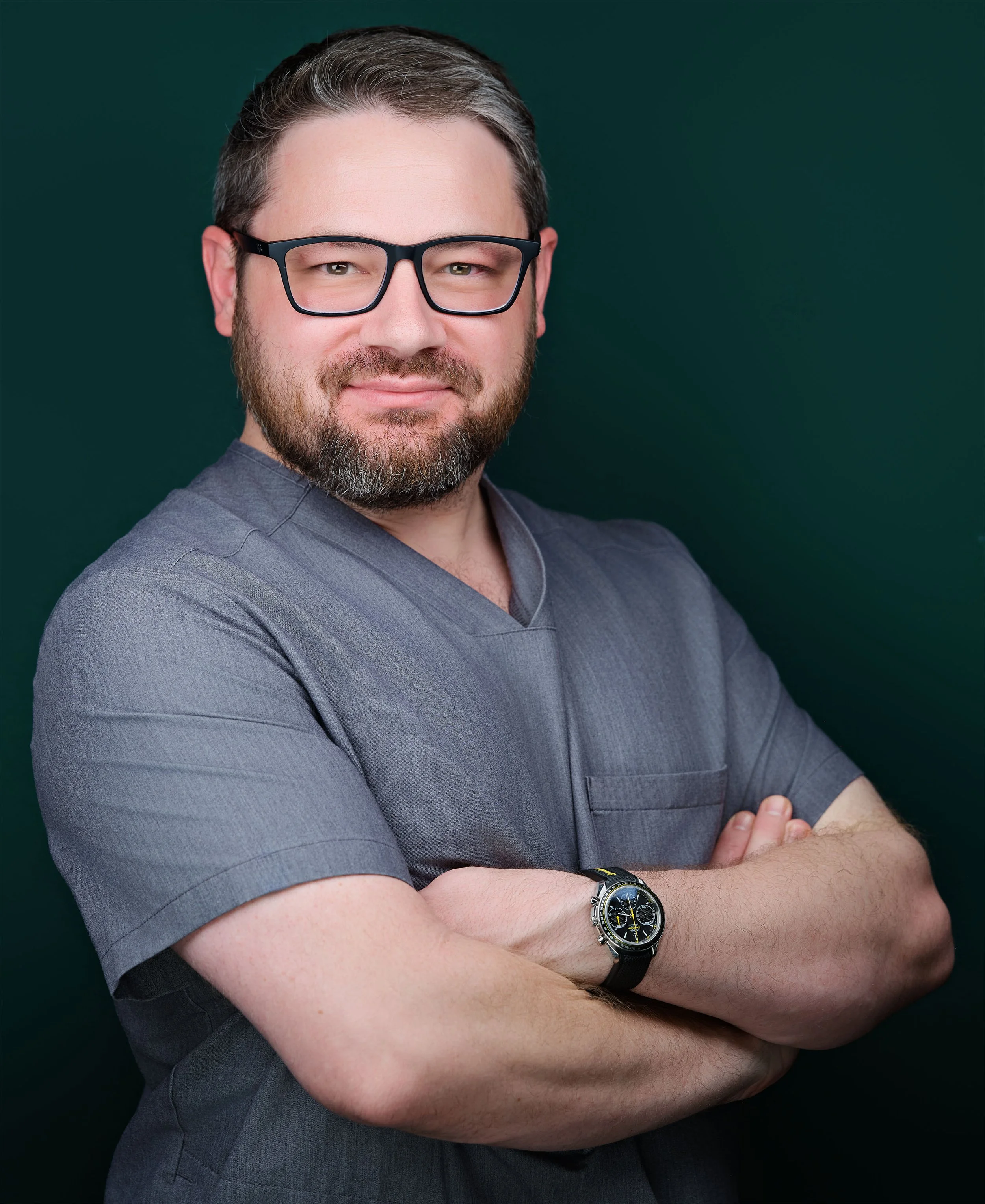
Joshua Bauernfeind, DO
Founder and physician
I came to wound care because it let me practice medicine the way I wanted to — hands on. It's one of the few specialties where you sit down with the same person week after week, identify the problem, do something about it, and watch it change.
I also came to it because I wanted a life outside of medicine. My wife and daughter are everything to me, and wound care let me build a career around them instead of the other way around. Dr. Josh Wound Group is the next step — my own practice, built around the same priorities.
Wound care is a team sport, and that's the part I love most. The CNA who notices a heel first, the nurse who changes the dressing, the therapist who keeps someone moving — they do most of the work, and a wound closes because all of it lined up. My job is to make that easier, not harder. Anyone on the floor can come to me with a concern, regardless of their role or how long they've been there.
I still love this work, and I'm proud of the way I do it.
Get in Touch
Facilities
Most buildings already have wound coverage. If you're adding it, or reconsidering what you have, reach us directly.
General inquiries
Have a question or need to reach us? Send a message and we'll respond as soon as we can.
Please do not include sensitive medical information, symptoms, or protected health information in this form — it is not a secure channel for clinical communication and is intended for general inquiries only.
If you are experiencing a medical emergency, please call 911 or go to the nearest emergency room. This form is not monitored continuously and should not be used for urgent or time-sensitive matters.